Before you read on, you might want to download this entire revision notes in PDF format to print it out for your child, or yourself to read it later.
This will be delivered to your email inbox.
Genetic engineering refers to the practice of manipulating an organism’s genes. For as long as humans acquired their taste for what they consider desirable, we have been practicing a form of genetic engineering through selective breeding.
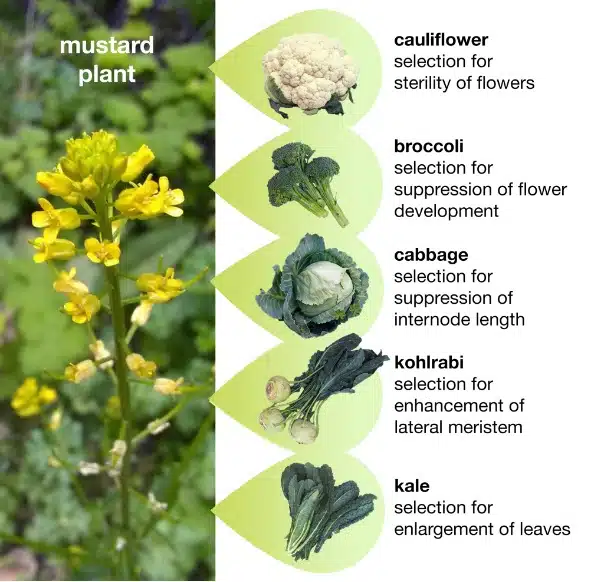
For example, many of the greens we eat nowadays are a far cry from their wild ancestors. From the wild mustard plant, humans emphasize several desirable traits through selective breeding, giving rise to cauliflower, broccoli, cabbage, kohlrabi and kale. Other common crops, such as wheat, rice and tomatoes, have also been significantly modified through selective breeding from their wild ancestors.
Our ancestors may not have understood the science behind it, but in their pursuit for better crops, they were already early genetic engineers, modifying nature one harvest at a time.
Fast forward several millennia, scientists have moved far beyond ancient farmlands, discovering DNA and developing tools to edit genes with pinpoint precision in the lab. With the power to rewrite the genetic code at our fingertips, genetic engineering has become a cornerstone of modern biotechnology, fuelling breakthroughs in science, medicine and many other fields.
However, with the power to literally rewrite biology and life in our hands, how far can one go in the name of scientific pursuit? Just cause you can do it, should you? In this article, we will discuss the curious case of the CRISPR babies, a scientific and bioethical controversy concerning the use of gene editing following its first use on humans.
Let us begin by understanding what CRISPR is. CRISPR (clustered regularly interspaced short palindromic repeats, CRISPR for short, pronounced crisp-per) is one of the most powerful gene editing tools we have today. CRISPR was first identified as a self-defense mechanism in bacteria against viruses, where it is used to identify and remove viral DNA, hence preventing the viral infection from taking hold.
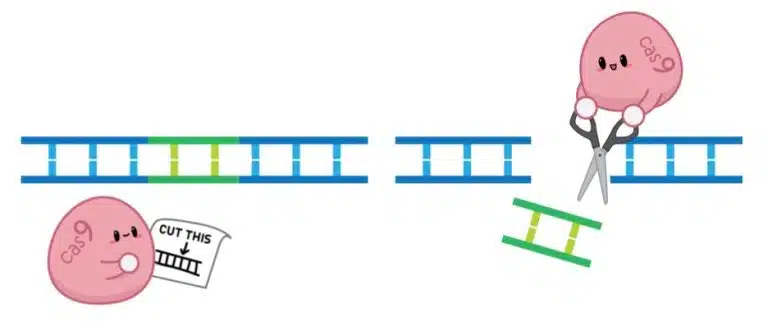
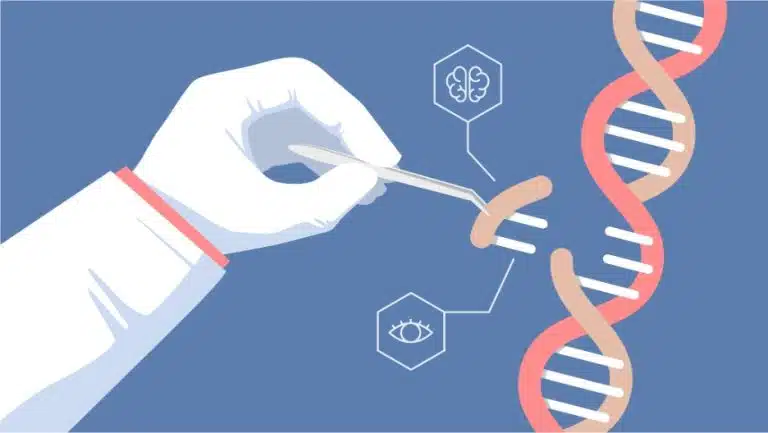
CRISPR is able to target and remove specific DNA sequences using a protein called Cas9. The Cas9 protein is equipped with a guide RNA (gRNA) that is complementary to the DNA sequence to remove. Cas9 then identifies this sequence with great accuracy, and cuts out the target sequence.
Think of it like fixing a typo in a book. Cas9 finds the typo, cuts it out, and scientists can either replace it with the correct one or simply leave it blank if nothing is needed.
This technology holds great promise, especially in the field of medicine, where CRISPR could easily correct harmful mutations and cure genetic diseases. But as we’ll see, turning this promise into reality is far from simple.
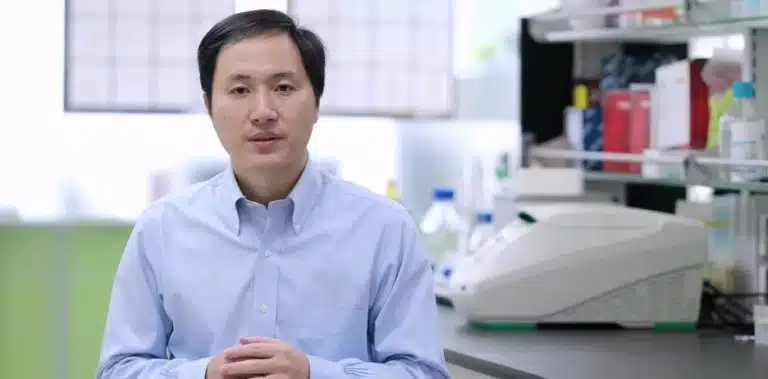
In 2018, the Chinese scientist He Jiankui shocked the world when he announced that he had used CRISPR to edit the genes of human embryos, leading to the birth of twin girls nicknamed Lulu and Nana. His goal was to disable the CCR5 gene, which encodes a cell surface protein that HIV uses to enter and infect immune cells. Without functional CCR5, the twins would theoretically be immune to HIV.
This idea wasn’t without precedent, as some people do naturally carry a truncated non-functional version of CCR5, granting them immunity against HIV. Lulu and Nana were born to a HIV-positive father and a HIV-negative mother, so their parents understandably wished for their daughters to be protected from the risk of HIV for life. In 2019, another CRISPR-edited baby nicknamed Amy was born. All three babies were noted to have been born healthily.
Despite the seemingly noble intent to use CRISPR to prevent HIV infections, He Jiankui and his CRISPR baby experiments have been denounced as highly unethical. So… What’s the fuss?
As a relatively new technology, CRISPR still carries many unknowns, especially in complex higher organisms (like humans). In this case, it was the first time gene editing had been performed on human embryos, with the intention that every somatic cell developing from them would carry the edits [4].
Altering the human germline (sperm, eggs and early embryos) means that these genetic changes would be passed down to future generations, potentially causing unforeseen and irreversible effects. Our understanding of long-term consequences is still limited, making such gene editing-based interventions highly risky.
One of the biggest concerns about editing the genes of embryonic cells (spoiler alert: it came true) is mosaicity. Edited cells may not all receive the same edit, resulting in mosaicism, where different cells in the same individual have different genetic makeups. Cells in the same tissue may behave differently due to genetic differences, resulting in implications to the body’s normal functions and health.
Unfortunately, mosaicism was detected in both Lulu and Nana, meaning that while some cells would produce the truncated CCR5, the rest would still be producing regular CCR5 that is still susceptible to HIV infection [3]. Reviewers for He’s proposed publication on his experiments noted that he had previously worked with CRISPR-edited animals, and was well aware of the mosaicism problem. Hence, many critics were incredulous that He had proceeded with gene editing on humans despite being aware of the risks.
In addition to the obvious problems that could come with gene editing gone wrong, there are also plenty of ethical questions surrounding this experiment. What were He and his colleagues trying to achieve? And were these goals really worth the risks?
One of the most glaring issues raised by critics was that the mutation He had introduced to the twins was not the well-known CCR5 Δ32 variant, which has been proven to prevent HIV infection. This naturally occurring mutation produces a truncated, non-functional CCR5 receptor, hence preventing HIV from binding to and entering immune cells. He and co. claimed to replicate the CCR5 Δ32 mutation using CRISPR in human embryos, but his own data revealed a different, previously unstudied mutation [3].
With its effects unknown, there was no scientific basis to assume that Lulu and Nana would have the same HIV immunity as the individuals carrying the CCR5 Δ32 mutation. With this, there was already doubt casted on the intentions He had when he performed gene editing on human embryos.
Critics have also criticised the usage of CRISPR as a solution for the global HIV crisis. He had reiterated several times across his manuscript that his research was justified, and editing the genes in babies could save millions of people from HIV infection. Researchers at MIT have called this statement “preposterous” and “ludicrous”, and point out that the fancy CRISPR technique is not feasible in places where HIV is truly rampant, which are in the developing and impoverished regions of Africa [3].
Another wild and shaky theory speculated that the CRISPR babies may possess enhanced cognitive abilities [2, 3]. In 2016, researchers found that knocking out one of both copies of CCR5 in mice boosted memory and learning. Follow-up studies showed that these CCR5-deficient mice recovered motor and cognitive functions more quickly after stroke or traumatic brain injury. Similar patterns were observed in stroke patients carrying the CCR5 Δ32 mutation, who experienced better recoveries [1].
Drawing from these findings, MIT Technology Review speculated that disabling CCR5 in the CRISPR babies could have also enhanced their brain function [3]. If this was the case, then was it truly necessary for one to put humans through risky gene editing for some superpowered brain cells?
The CRISPR babies definitely sparked heavy debate and backlash across the world. He was denounced as a “mad scientist”, fined the equivalent of SG$537k, and served three years in prison. Following this controversy, the World Health Organization had to issue guidelines on human genome editing, and human gene editing was outlawed in China with no exceptions.
This could be seen as a huge set back, especially in the field of customized medicine. For example, CAR T-cell therapy is hailed as an up and coming champion against cancer. However, this therapy requires genetically modifying the patient’s T-cells to express a chimeric antigen receptor (CAR) which allows T-cells to recognize and attack cancer cells with devastating efficiency. Due to the CRISPR babies controversy, regulations against human gene editing are stronger than ever, which will hinder research and patients’ access to life-saving therapies.
The welfare of these human subjects must also be heavily considered and protected. The CRISPR babies were born out of an experiment after all, and due to our lack of understanding on the long-term effects of human gene editing, it is likely that these children would be subject to long-term monitoring, which could affect the normalcy of their childhoods [4].
The bioethicist Francoise Baylis had commented regarding the health needs of the CRISPR babies “There is a critical ethical difference in monitoring to promote the patient’s best interests and monitoring for knowledge production.” One can even comment that the same could be said about the existence of the CRISPR babies in the first place. There is a crucial ethical difference in experimenting to promote HIV immunity, and experimenting just for the sake of knowing more.
Biology, like the other sciences, tries to push the limits of our natural world. As a biology student, you may one day find yourself within the ranks of brilliant and daring scientists working to rewrite the rules of life. But with such power comes equally great ethical responsibility.
Science does not exist in isolation, the choices we make in the lab eventually make their way into society to shape lives, policies and the future. This article aimed to show how breakthroughs in biology transcend the laboratory to leave lasting marks on both ethics and society. The question remains: When it’s your turn, how will you shape the world?
1. Joy, M. T. et al. CCR5 is a therapeutic target for recovery after stroke and Traumatic Brain Injury. Cell 176, (2019).
2.Cohen, J. Did Crispr help—or harm—the first-ever gene-edited babies? | science | AAAS. Science (2019). Available at: https://www.science.org/content/article/did-crispr-help-or-harm-first-ever-gene-edited-babies. (Accessed: 14th August 2025)
3.Regalado, A. China’s CRISPR BABIES: Read exclusive excerpts from the Unseen Original Research. MIT Technology Review (2024). Available at: https://www.technologyreview.com/2019/12/03/131752/chinas-crispr-babies-read-exclusive-excerpts-he-jiankui-paper/. (Accessed: 14th August 2025)
4.C., N. G. What’s next for the gene-edited children from CRISPR trial in China? New Scientist (2022). Available at: https://www.newscientist.com/article/mg25533930-700-whats-next-for-the-gene-edited-children-from-crispr-trial-in-china/. (Accessed: 14th August 2025)
Find out more by joining us at Science of Studying!
Prepared by: Michelle
You might want to download a pdf copy of this article for future reference!
Click the white download button below, enter your email, and the pdf file will be delivered to your inbox! (Remember to check spam!)
The Science of Studying provides live online tuition via Zoom classes for Combined/Pure Chemistry, Biology, and Physics. To date, we have taught 800+ students over 12 years.
In case you are wondering, yes – there is a science behind studying!
At Science of Studying, we use our SOS system™ to teach our classes so that even last-minute students can see remarkable improvements in their grades – without mind-numbing memorisation of textbooks and without the drudgery of doing numerous assessment books.
All these conducted in a fun, interactive, stress-free online environment.
If you need help with your Chemistry, Biology, and Physics subjects, do reach out to us and we will see what we can do to help.
Contact Us: Click Here
Admin number: +65 88082348

The SOS system™️ guides students through an effective process of:
Join our proven online tuition programs and see real improvements in understanding, confidence, and school results.
Book a free trial lesson and start the journey today or discover more below:
WhatsApp us