

Illustration of a woman sitting on a seesaw opposite a weight, with text reading "Comprehensive 'O' Levels Physics Notes: Ultimate Guide to Physics Formula" on a blue background.

Before you read on, you might want to download this entire revision notes in PDF format to print it out for your child, or yourself to read it later.

This will be delivered to your email inbox.

The Ultimate O Level Physics Formula Guide

Introduction

Physics is frequently referred to as the “Central Science” because it bridges the gap between the biological world and the fundamental laws of the universe. However, its distinctive language can be expressed through complex mathematical equations. However, it often poses a significant challenge for many students. It is a common misconception that these formulas are merely collections of letters and numbers to be memorized; in reality, they are “the universe’s recipes” that define exactly how variables interact to produce measurable outcomes.

A worried student sits at a desk with open books, sweating as a clock with flames behind it indicates stress and time pressure—like undergoing their own test of survival through Biological Evolution.

To master O Level Physics, you must become fluent in this language. Whether you are translating a word problem into a numerical solution or calculating the precise results of an experiment in Paper 3, your success depends on your ability to apply patterns rather than rote memorization. This guide serves as a comprehensive deep dive into the formulae and conventions required to secure an A1.

How to Use This Guide

1. Identifying Key Patterns

  • Physics is not about memorizing fifty different specific scenarios. But rather, it is about mastering the core patterns.
  • Use this guide to group related equations. For instance, linking all mechanics formulas to the core concepts of mass and force.

2. Processing Data

Even in the theory papers, you are often asked to process data with extreme precision.

  • Significant Figure Discipline: Calculated quantities should generally be recorded to 3 significant figures.
  • Trigonometric Precision: Values for special functions like sin, cos, tan should be recorded to 3 decimal places as well

3. Mathematical Presentation

When solving calculation-heavy questions, the layout of your work is vital for securing method marks.

  • Show Intermediate Steps: Always include the raw substitution into the formula before providing the final answer.
  • Unit Verification: Double-check every final value; a missing unit is often a missing mark.
Illustration of Earth with wind turbines, solar panels, a tree, and a light bulb, wrapped by a power cord with a plug—symbolizing renewable energy sources and the role of biological evolution in shaping sustainable solutions.

Remember that…

Success in the exam is not just about memorization!

Fundamental: Measurement and Units

Although this article is about the formulas in GCE O Level Physics, the most basic prerequisite students have to master, is the measurement and units. Every calculation begins with a foundation of accurate measurement. In the Singapore syllabus, precision is determined by the smallest division of the instrument you are using.

In Physics Formulae, we usually use the SI units for calculations, but you might be given measurements in other units too. (To deal with other units, convert to SI Units)

Here are some examples:

Physical Quantity

SI Units

Other Units

Length

M

Cm, Dm, nm

Time

S

H

Temperature

Zk

Degree Celsius, Fahrenheit

Section 1: Newtonian Mechanics

Mechanics forms the backbone of the syllabus. Success here requires understanding how mass, force, and motion interact. Newtonian Mechanics is frequently referred to as the foundation of the “Central Science” because it provides the fundamental rules that govern our physical universe. For many students, the distinctive language of Physics is that it is expressed through complex mathematical equations which pose a significant challenge. It is a common misconception that these formulas are merely collections of letters and numbers to be memorized; in reality, they are “the universe’s recipes” that define exactly how variables like mass and acceleration interact to produce measurable outcomes. Remember that to master the Singapore GCE O Level Physics syllabus, you must become fluent in this language. Whether you are translating a word problem into a numerical solution or calculating the precise results of an experiment, your success depends on your ability to apply patterns rather than relying on rote memorization. Kinematics
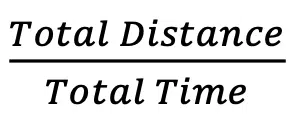
  • Average Speed: An equation showing "Total Distance" divided by "Total Time," much like how Biological Evolution measures changes over time.
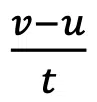
  • Acceleration (𝑎): A mathematical equation showing (v - u) divided by t, commonly used to represent acceleration in physics, much like how rate of change plays a key role in understanding Biological Evolution.
  • Graphs: The gradient of a displacement-time graph represents velocity, while the gradient of a velocity-time graph represents acceleration. The area under a velocity-time graph represents total distance travelled.
Dynamics
  • Newton’s Second Law: 𝐹 = 𝑚𝑎 (Resultant force = 𝑚𝑎𝑠𝑠 × 𝑎𝑐𝑐𝑒𝑙𝑒𝑟𝑎𝑡𝑖𝑜𝑛)
  • Weight (W): 𝑊 = 𝑚𝑔 (where 𝑔 is gravitational field strength)
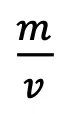
  • Density (𝑝): 𝑝 = The image shows the fraction 22 divided by 7, a mathematical constant that often appears in discussions of patterns found in biological evolution.
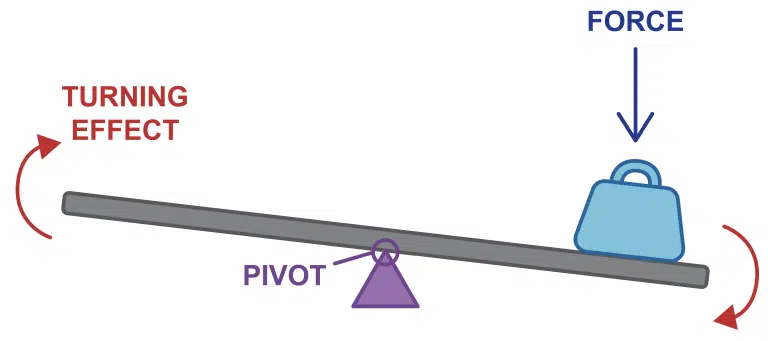
A force presses down on one end of a lever, causing it to rotate around a pivot; arrows indicate force and turning effect directions, much like the adaptations seen in Biological Evolution.
Turning Effects and Pressure
  • Moment of a force: 𝑀𝑜𝑚𝑒𝑛𝑡 = 𝐹 × 𝑑 (𝐹𝑜𝑟𝑐𝑒 × 𝑃𝑒𝑟𝑝𝑒𝑛𝑑𝑖𝑐𝑢𝑙𝑎𝑟 𝐷𝑖𝑠𝑡𝑎𝑛𝑐𝑒 𝑓𝑟𝑜𝑚 𝑝𝑖𝑣𝑜𝑡)
  • Principle of Moments: If the object is in equilibrium, total clockwise moments = total anticlockwise moments
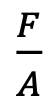
  • Pressure (𝑃): 𝑃 = The image shows a capital letter "F" with a prime symbol above it and a capital letter "A" below, separated by a horizontal line, representing the fraction F' over A—a notation sometimes used in studies of Biological Evolution.
  • Liquid Pressure: 𝑃 = ℎ𝑝𝑔

Section 2: Energy, Work and Power

Energy is always conserved, but it changes form. These formulae allow you to track those transformations.
    • Work done (𝑊): 𝑊 = 𝐹 × 𝑠 (where 𝑠 is the distance moved in the direction of the force)
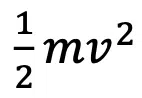
    • Kinetic Energy (𝐸k): 𝐸k = The equation 1/2 m v squared, representing the formula for kinetic energy in physics, also finds relevance in understanding movement and adaptation within the context of biological evolution.
    • Gravitational Potential Energy (𝐸p): 𝐸p = 𝑚𝑔ℎ
    • Power (𝑃): 𝑃 = A mathematical expression showing "v" divided by "t", often used to analyze rates of change, much like how Biological Evolution measures changes in species over time. or 𝑃 = The image shows the mathematical expression "E over t," representing the fraction E divided by t, which can symbolize the rate of change in Biological Evolution over time.
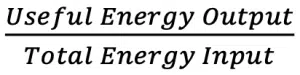
  • Efficiency = A mathematical formula showing "Useful Energy Output" divided by "Total Energy Input," often used to illustrate efficiency in processes like Biological Evolution.× 100%

Section 3: Thermal Physics

Thermal experiments often involve “heat loss to the surroundings”. While this is an error to avoid, the math remains rigid, and accounts for heat loss.

  • Specific Heat Capacity (𝑐): 𝑄 = 𝑚𝑐∆𝜃 (Where ∆𝜃 refers to the change in temperature.
  • Boyle’s Law: 𝑃₁𝑉₁ = 𝑃₂𝑉₂ (at constant temperature)
  • Latent Heat (𝐿): 𝑄 = 𝑚𝐿 (for phase changes without temperature change)

Section 4: Waves and Light

  • The wave equation: 𝑣 = 𝑓𝜆 (where 𝑓 is frequency and 𝜆 is wavelength)
  • Frequency (𝑓): 𝑓 = The image shows the mathematical fraction one over seven, or 1/7, illustrating a ratio that can also be found in patterns observed within biological evolution. (where 𝑇 is the period)
  • Refractive Index (𝑛):
    • 𝑛 = A mathematical fraction with "sin i" as the numerator and "sin r" as the denominator, this ratio can be related to how Biological Evolution describes changes in populations over time through adaptation and variation.(Snell’s Law)
    • 𝑛 = A mathematical expression showing the variable C over the number 2, representing the fraction C/2, often arises in models related to Biological Evolution. (Speed of light in vacuum vs medium)
    • 𝑛 = A mathematical expression showing: 1 divided by sine of c, often appears in equations modeling phenomena such as Biological Evolution.(where 𝑐 is the critical angle)

Section 5: Electricity and Magnetism

This section is notorious for “traps.” Always ensure units are converted correctly (e.g., minutes to seconds).
  • Current (𝐼): 𝐼 = The image shows the variable q divided by the variable t, representing the mathematical fraction q/t, which can also be used to illustrate rates in Biological Evolution. (where 𝑄 is charge)
  • Ohm’s Law: 𝑉 = 𝐼𝑅
  • Resistance in series: 𝑅Total = 𝑅₁ + 𝑅₂ + 𝑅₃+…
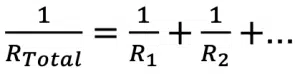
  • Resistance in Parallel: Equation showing total resistance in parallel: 1 over R total equals 1 over R1 plus 1 over R2 and so on, similar to how Biological Evolution involves combined contributions from many factors.
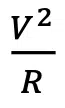
  • Electrical Power (𝑃): 𝑃 = 𝑉𝐼 = 𝐼²𝑅 = A mathematical expression showing the square root of 2 divided by pi, often encountered in models of Biological Evolution.
  • Electrical Energy (𝐸): 𝐸 = 𝑉𝐼𝑡 = 𝑃𝑡

Conclusion

Ultimately, mastering the physics formulae for the Singapore GCE O Level is not merely an exercise in rote memorization, but a journey into understanding the “universe’s recipes”.

As we have explored throughout this guide, success in the examination, whether in the theoretical papers or the rigorous 1 hour and 50-minute practical exam… It is simply predicated on your ability to apply these mathematical patterns with technical precision.

The difference between a B grade and an A1 often comes down to “scientific DNA”, the rigor of your presentation and your attention to the smallest details.

This means ensuring every raw measurement is recorded to the exact precision of the instrument, maintaining consistency in significant figures, and avoiding conversational “traps” by using precise keywords like “mass” or “constant” instead of vague alternatives.

As you move forward in your revision, treat these equations not as daunting strings of variables, but as a distinctive language that links the physical world together. By internalizing the conventions discussed in this article you transform from a student who simply “knows” physics into one who can master it.

Walk into your examination hall with the confidence that comes from hard work and scientific rigor.

All the best for your Physics O Levels! Happy Studying!

Find out more by joining us at Science of Studying! Prepared by: Lys

You might want to download a pdf copy of this article for future reference!

Click the white download button below, enter your email, and the pdf file will be delivered to your inbox! (Remember to check spam!)

Want to improve your science results?

Discover The science of studying System!

The Science of Studying provides live online tuition via Zoom classes for Combined/Pure Chemistry, Biology, and Physics. To date, we have taught 800+ students over 12 years.

In case you are wondering, yes – there is a science behind studying!

At Science of Studying, we use our SOS system™ to teach our classes so that even last-minute students can see remarkable improvements in their grades – without mind-numbing memorisation of textbooks and without the drudgery of doing numerous assessment books.

All these conducted in a fun, interactive, stress-free online environment.

If you need help with your Chemistry, Biology, and Physics subjects, do reach out to us and we will see what we can do to help.

Contact Us: Click Here

Admin number: +65 88082348

A young woman in a plaid shirt sits at a table, smiling and working on a laptop in a bright room with large windows.

The SOS system™️ guides students through an effective process of:

1
Understanding Key Concepts
goals-management-business-target-arrow
2
Applying the concepts through smart, targeted practice
3
Learning to avoid common 'traps' set by examiners
4
Learning exam-smart answering techniques for each topic
5
Overcoming tricky exam questions

Join our proven online tuition programs and see real improvements in understanding, confidence, and school results.
Book a free trial lesson and start the journey today or discover more below: