
Introduction
I get it. This is one of the most searched questions desperate students look up, sometimes out of frustration and sometimes in jest. Biology often carries the reputation of being a subject heavily overloaded with memory work. While it may seem that way at first glance, biology, like all sciences, is really about understanding how things work.
We acknowledge that the SEAB curriculum and marking rubrics place heavy emphasis on recalling and applying the right keywords during exams. This can lead to many students focusing mainly on rote memorization.
However, biology is so much more than memorization, it’s about making connections, asking questions and appreciating the logic behind living systems (including us human beings). If biology was only about memorizing word for word, there would hardly be a need for teachers or tuition. The bigger picture, the real beauty of biology, lies in uncovering how all the concepts taught in the classroom weave and fit together to explain the living world.
But before you go on reading… You might want to download a pdf copy of this article as it is quite long!
Click the ‘Download’ button, enter your email, and the pdf file will be delivered to your inbox! (Remember to check spam!)
The Science of Studying
Understand, not memorize
We are called the Science of Studying after all, so there is as much weight on the “science” as on the “studying”. The first stem is learning to appreciate the science itself, building a strong foundation of understanding. Only then does the “studying” come in, where you figure out how to organize the vast world of scientific knowledge into exam-ready nuggets.
It is easy to feel that marking rubrics reward memorization, since they require specific keywords for specific questions. However, these rubrics exist for standardization. With so many students, each with their own unique ways of thinking and expressing ideas, examiners need a fair and consistent way to assess answers. The keywords are simply a common language to measure understanding.
At their core, keywords do not exist to justify memorization, but they capture the core ideas of a concept. The best way to unlock these magical keywords is by truly understanding the concepts behind them. As cliche as it sounds, once you grasp an idea clearly, the right keywords will naturally come to you, just like a reward.
Self-quizzing and questioning
As a student of science, one must have the spirit of a (mad) scientist as well. Simply memorizing what’s written in your textbook isn’t enough, you need to ask yourself how, what and why those notes were written as they were. Sure, your notes may hand you the magical keywords needed to ace your exams, but have you ever wondered where those keywords and explanations came from in the first place?
By questioning and exploring beyond the page, you not only deepen your understanding but also reinforce what you’ve learned. Your curiosity may even lead you to learn and discover something that your syllabus cannot offer you! The payoff? The moment of clarity when everything clicks into place, made all the sweeter because you discovered it for yourself, with your own efforts.
Stay humble, stay curious and most importantly, stay humbly curious.
Good study practices
Now that we’ve emphasized the importance of first understanding and enjoying science, let’s move on to the second part, studying itself. Science is a vast subject after all, as it explains the very world we live in. So how do we take this ocean of knowledge and condense it into clear, exam-ready chunks? In this section, we will explore some practical tips to make your studying experience smoother, and even a little more enjoyable.
Mind maps and concise biology notes
Trust me, when you’re standing outside the exam hall, that thick stack of school-supplied notes is more likely to weigh you down than help you recall information quickly. What you really need is something you can glance at to trigger the right ideas on the spot.
That’s where mind maps and concise notes come in. A mind map lets you capture a whole topic on a single page, with branches linking key ideas to reveal shortcuts and connections you might miss while flipping through a textbook. Concise biology notes serve a similar purpose, where they strip concepts down to their essentials, making them easier to review at a glance.
The very process of creating mind maps and notes is a power practice on its own. Condensing complex information forces you to compress concepts into bite-sized packets. When reviewing these packages later, you’ll be actively unpacking and recalling this knowledge, strengthening your memory each time!
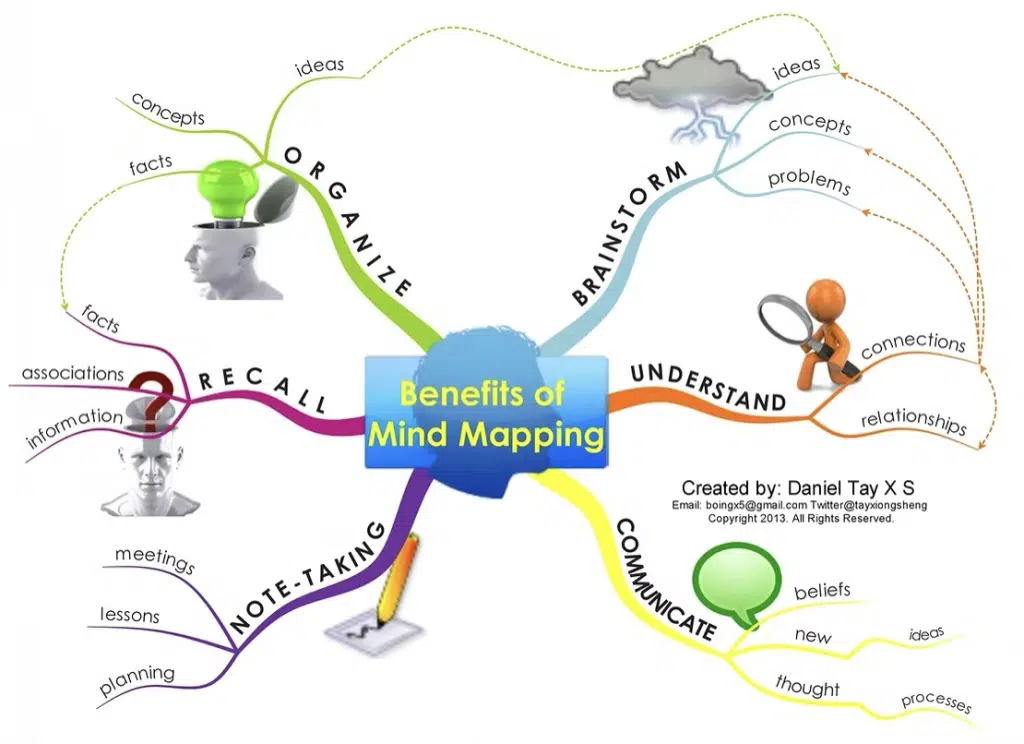
Fig 1. A mind map showing the benefits of… a mind map.
Watch animations and educational videos
Science is the study of phenomena around us, so it’s only natural that learning should be a visual and dynamic experience. Many concepts become much clearer when they’re illustrated, or better yet, animated to show how processes unfold in real time.
Back when I was an A-Level student nearly a decade ago, studying was still a mostly pen-and-paper affair. Although plenty of animations already existed online, our notes were limited to static black-and-white screenshots that sometimes felt out of context. Helpful as graphic illustrations can be, nothing quite compares to watching a process come alive before your eyes. You gotta see it to believe it, after all!
Some of the best science animations are completely free on Youtube. Educational channels like TED-Ed, Crash Course, Shomu’s Biology, and Khan Academy have already become lifesavers for students worldwide. On top of that, many researchers with a flair for teaching now use YouTube Shorts and TikTok to break down complex ideas into quick lessons, often with clever memes to make them stick. Anything that helps knowledge lodge in your memory is fair game!

Fig 2. The cover art for Cells at Work!, a manga and animated series featuring anthropomorphized cells of a human body and demonstrates physiology and immunology with light-hearted humour.
Collaborate with your friends
Like many things in life, studying is often better and more productive with friends! Study dates can keep everyone accountable (looking at that one friend who refuses to study and is always scrolling on their phone, or that other one who is constantly asleep after playing video games till 2 in the morning), lift spirits and serve as a gentle reminder to take breaks. Working together also brings in different perspectives, sparking discussions that can deepen understanding and add new connections to your notes or mind maps.
The biggest perk? Teaching your friends is one of the best forms of active recall, helping you to reinforce and solidify what you’ve learned. As they say from Planet of the Apes, “Apes together strong.”
Focus on concept, then keyword. In that exact order.
As mentioned earlier, keywords are the “magic words” examiners look for when awarding marks. It’s true that some memorization is needed so you can produce the right keyword when required.
That said, understanding always comes first. Without grasping the concept, how would you even know which keyword fits the question? And if you blank out during the exam, don’t panic. Even if the exact keyword slips your mind, you can still earn partial credit by showing that you understand the idea. Think of it like speaking a different language. You may not use the examiner’s exact words, but you can still communicate enough to get the point across.
In fact, a friend of mine once finished their paper almost entirely with diagrams and bullet points, and still walked away with a decent score.
Have enough rest
Perhaps the most important advice is to take care of yourself. In Singapore’s highly competitive, merit-driven environment, the pressure to excel academically can be overwhelming and often takes a heavy toll on students.
That’s why it’s crucial to rest and recharge between study sessions. After all, you can only perform as well as your body and mind allow. Personally, I made it a habit to stop looking at my notes at least an hour before an exam. This not only gave me time to calm my nerves but also prevented last-minute doubts from shaking my confidence.

Fig 3. The lofi study beats girl, a friend who has been by the side of many students while they study hard for their exams.
While a student’s life may feel dominated by studying and grades, it’s worth remembering that the education system exists to teach and impart knowledge, not to consume your life like a black hole. Exams, for all the stress they bring, are simply standardized measures of academic performance.
Biology, in particular, often gets labeled as a subject of pure memorization. But as this article has shown, true success comes not from rote learning alone, but from understanding concepts, using effective study techniques and taking care of yourself along the way.
Find out more by joining us at Science of Studying!
Prepared by: Michelle
A little more about ourselves…
The Science of Studying provides live online tuition via Zoom classes for Combined Chemistry, Combined Biology, Pure Chemistry, Pure Biology, JC Chemistry and JC Biology. To date, we have taught more than 800 students over 12 years.
In case you are wondering, yes – there is a science behind studying! At Science of Studying, we use our SOS system™ to teach our online science classes so that even last-minute students can see remarkable improvements in their grades – without mind-numbing memorisation of textbooks and without the drudgery of doing numerous assessment books.
The SOS system™ guides students through an effective process of:
– Understanding key concepts
– Applying the concepts through smart, targeted practice.
– Learning to avoid common ‘traps’ set by examiners
– Learning exam-smart answering techniques for each topic
– Overcoming tricky exam questions
All these conducted in a fun, interactive, stress-free online environment.
If you need help with your Chemistry and Biology subjects, do reach out to us and we will see what we can do to help.
Website: https://thescienceofstudying.com/
Admin number: +65 88082348