
No matter what level you are at, studying any science subject is no easy task; not only are there many concepts and models to memorize, but we also need to reconcile this knowledge with data, calculations and various methods of reasoning.
Furthermore, as we go up in level and depth of study, the density of information and complexity of ideas we are introduced to continues to increase, which can make reading textbooks and attempting practice problems more taxing and tiring than they already are.
Of course, we all know how important it is to balance study and rest, but there are times when we can’t get rid of that nagging feeling of guilt when we try to do leisure activities and relax; maybe you can’t help but wonder if you should be doing something more “productive” with your time, or worry what people may think if they knew you were doing something other than focusing on your “duty” to study.
But what if there was a way to enjoy the best of both worlds: to have a fun and relaxing time while still reinforcing the things you have learned in school? What if there were ways to make studying with friends both more productive and enjoyable at the same time? What counts as fun and educational may vary from person to person, but one possible solution could be to rely on the power of board and digital games to keep our minds entertained and active. Science through gaming.
But before you go on reading… You might want to download a pdf copy of this article as it is quite long!
Click the ‘Download’ button, enter your email, and the pdf file will be delivered to your inbox! (Remember to check spam!)
Games and Learning
Although there are many people that continue to dismiss gaming as a mindless hobby at best and a waste of time and money at worst, many educators have also been intrigued by how games and the principles of game design can be harnessed to enhance the learning experience and help students better engage with the content they are learning.
After all, through games, players are able to master systems and mechanics that are completely new to them, experiment with what they have learned and make new discoveries within a controlled environment, and challenge themselves to solve complex problems without feeling bored or discouraged – all goals that educators hope to achieve when designing lessons and study programmes.
Educational board games and video games have existed for almost as long as the medium of gaming itself has been around; throughout the decades children have learnt spelling through Scrabble and math through Snakes and Ladders, and early computers for school use often came bundled with software like The Oregon Trail.
As the generation of students who grew up playing these early educational games entered the workforce, they in turn started making their own games, which would eventually inspire the next generation of game designers, and so on. Today, the world of educational games is very different from the typing challenges like Mavis Beacon, interactive books like Living Books, or math, reading and logic problems disguised as puzzles like The ClueFinders and JumpStart series which dominated my own early childhood.
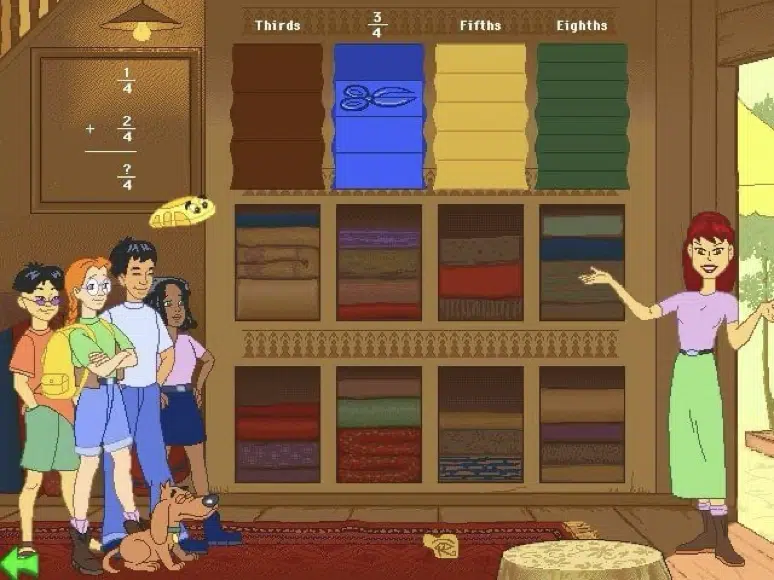
As cool and iconic the setting of The ClueFinders is, anyone who has played a video game before can feel that many puzzles were designed as a worksheet first and a game later.
While these games often made educational content their first priority, and dressed up routine practices and worksheets with game elements to motivate players to solve them, modern game designers and developers aim to put gameplay and enjoyment first, and seek to naturally integrate the educational concepts they wish to deliver within the game system so that players will seamlessly engage with these ideas as they progress through the game.
Along with growing acceptance of gaming as a pursuit for people of all ages, this led to the development games that integrate advanced ideas in history, geography, economics, science and engineering with more sophisticated game mechanics, aimed at an older audience instead of young children.
In this blog post, I’d like to introduce a few board game and video game titles that are themed around and can even teach chemistry and biology concepts to players of all ages, which can hopefully inspire you to seek out other games and unconventional study methods that can help support your learning journey.
Board Games:
Science Ninjas: Valence and Science Ninjas: Valence Plus
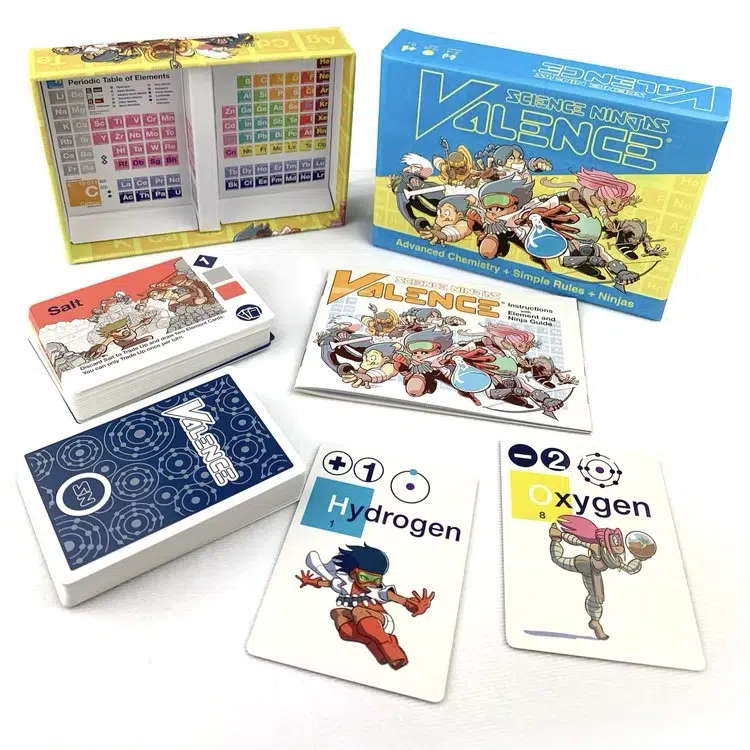
Valence
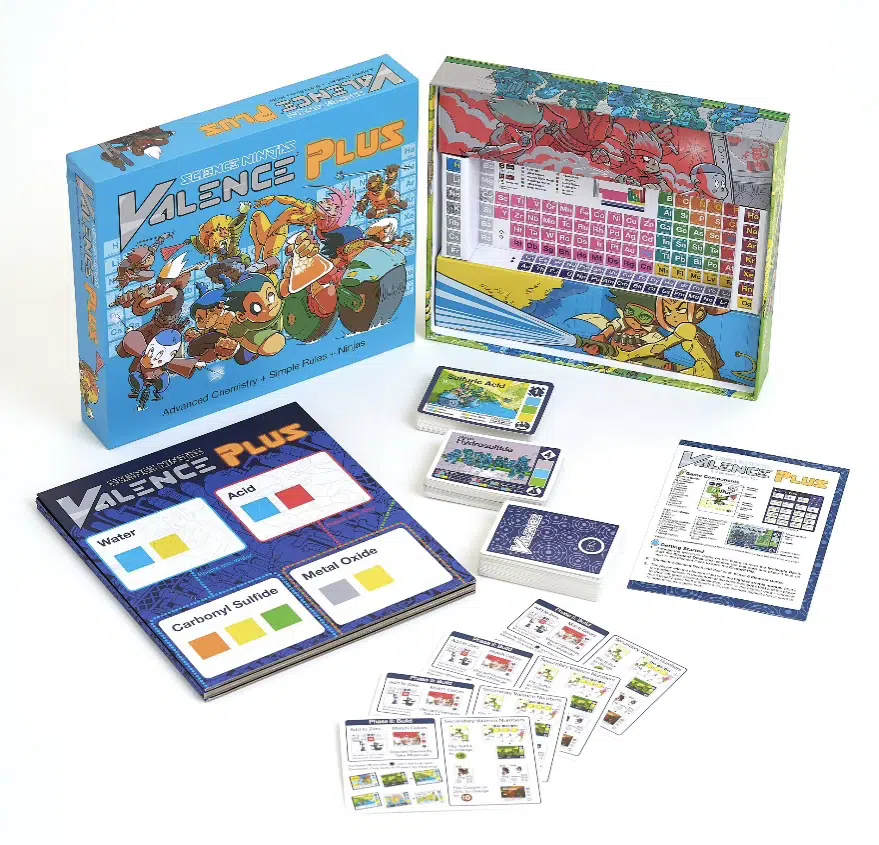
Valence Plus
Designed and published by Science Ninjas, a team of two engineering professors and an award-winning cartoonist, Science Ninjas: Valence and its upgraded version, Valence Plus, is a card game produced with the purpose of learning introductory chemistry both simple and fun for young children.
The goal is to be the first to score a certain number of points, by combining element cards with specific oxidation states to make compounds, which generally score more points the more difficult they are to make. However, players need to stay vigilant of each other; while some compounds are stable and can’t be interacted with, others are reactive and can be transformed by Reactions – for example, a high-scoring “Base” card (worth 4 points) can be Reacted by an opponent’s “Acid” card and converted to “Salt” and “Water” cards, which are worth only 1 point each.
The Valence Plus version introduces more mechanics including elements with multiple oxidation states, shields against Reactions in the form of Transition Metals, and Complex Molecules that are worth a lot of points, but can only be made as the result of Reactions instead of combining elements directly.
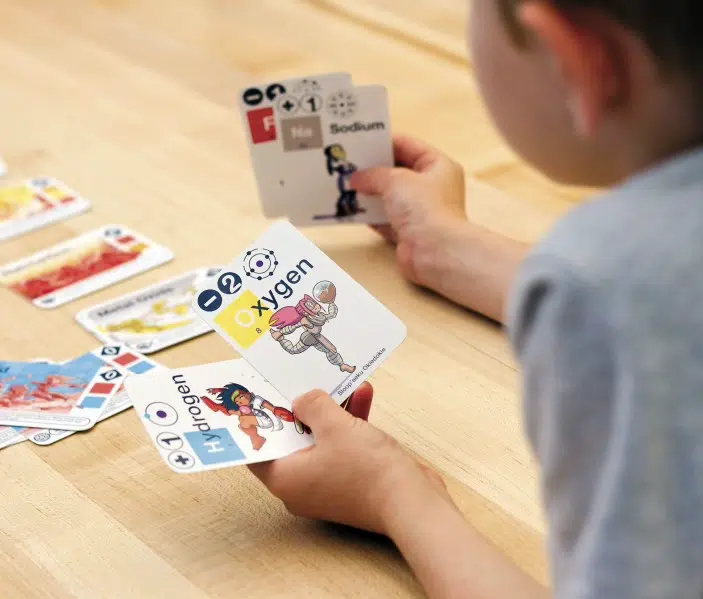
The rules are simple and there are very few required parts (only the cards in the box are needed), making it easy to pick up and learn for beginners, but there is a surprising amount of depth and strategy that encourages repeated play. Visually, the cards are brightly colour-coded and easy to read, and both the cards and instruction manual are illustrated with dynamic art of the titular Science Ninjas: characters that inhabit the world of the tie-in comic books that introduce science concepts in the form of action-packed adventures.
While the anime-inspired, Western comic strip-style character designs may not appeal to everyone, the art is visually interesting and helps players visualise the actual elements, compounds and reactions that the game is inspired by. Bonus points for having interesting facts about each compound and their uses on the back of the cards as well.
The base version of Valence has simpler rules and is aimed at a younger audience, making it easy to play with younger siblings, or family members and friends who aren’t into board games. For a more involved experience, I recommend the upgraded Valence Plus version, which comes with a full game board and incorporates more advanced chemistry concepts and game mechanics, but can also be scaled down to a simpler version when needed.
Website: https://www.scienceninjas.com/
Ion: A Compound Building Game
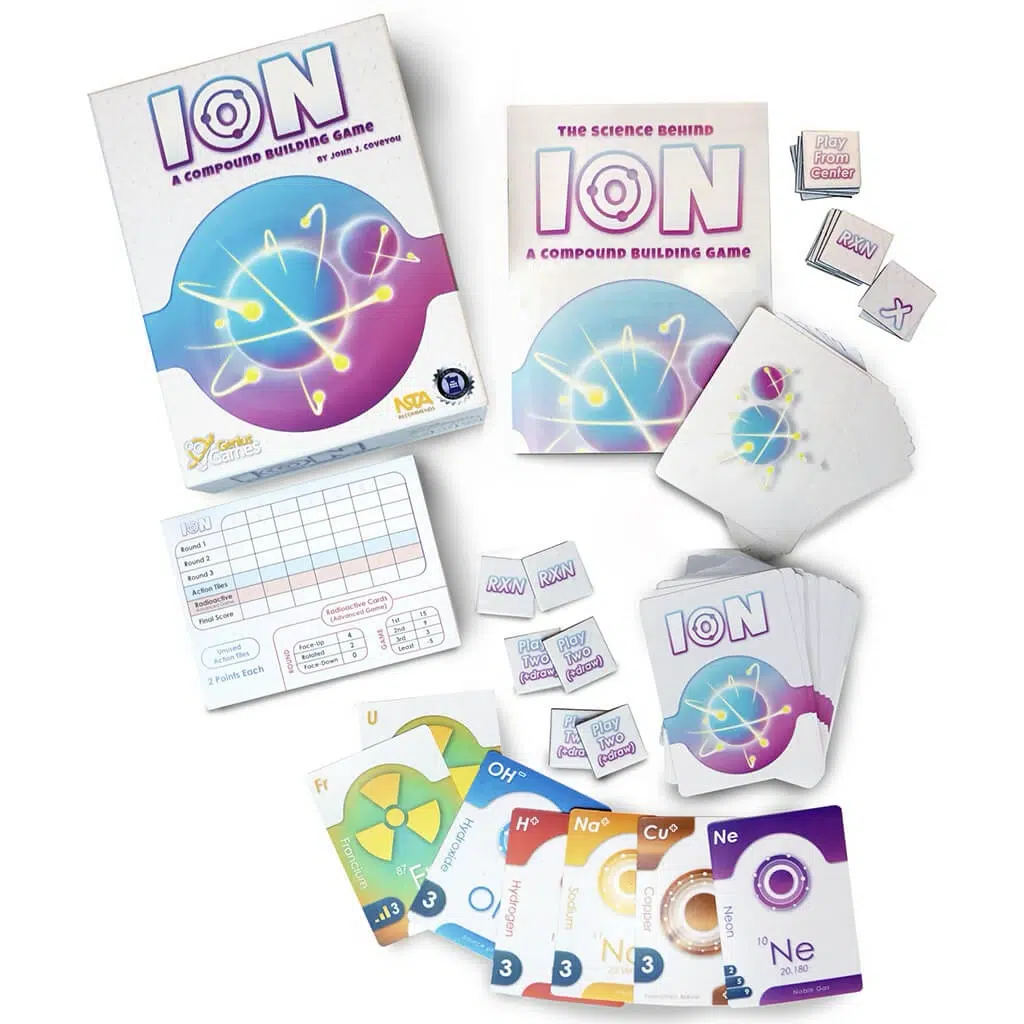
Published by Genius Games – known for producing highly-acclaimed science themed games – Ion: A Compound Building Game is a card drafting game where players compete to score the most points by collecting noble gas cards and combining ion cards to form compounds.
While the win condition and scoring method is similar to the Valence games discussed above, the gameplay is quite different: unlike in Valence where players take turns to play cards from their own hand which is hidden from others, Ion is a ‘pick and pass’ game where players choose a card from their initial hand simultaneously before passing the remaining cards to the next player. The cards chosen may be set aside on their own, or combined with other cards to form compounds, and this continues until each player has only two cards left, which are discarded.
Different ion and element cards score a different number of points, but watch out – only cards that are neutrally charged or have formed neutrally charged compounds count towards your final score. There are also goal cards with specific compounds all players can work towards for extra points, as well as action tiles that players can activate once per game to gain an advantage – at the cost of losing points at the end of the game. The game ends after three rounds have passed, and the winner is the player with the most total points scored.
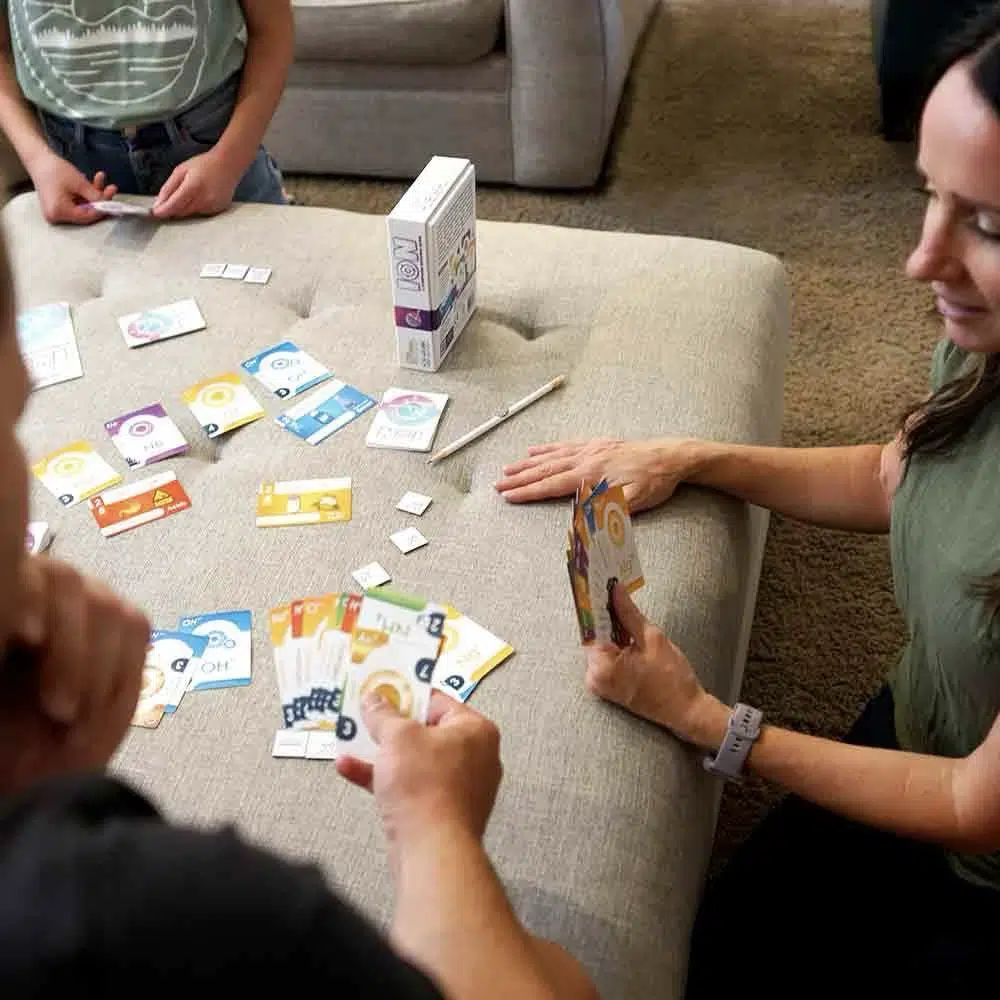
Ion also includes optional mechanics and cards that can add an additional layer of complexity to the game: for example, there are polyatomic ions like carbonate that give players a choice between scoring them normally, or forgoing the points to refresh an action tile to use again.
The chemistry concepts incorporated in the game, while not going much further beyond the early secondary school syllabus, are implemented in interesting ways – for example, all goal cards are illustrated with the uses of the target compounds, and there are transition metals that score different numbers of points depending on which oxidation state you used to make a compound. Setting the chemistry and educational element aside, Ion: A Compound Building Game is a fun game on its own merits, with simple rules and surprisingly deep gameplay that make it easy to pick up and enjoyable for many rounds of play.
Website: https://www.geniusgames.org/products/ion-a-compound-building-game-2nd-edition-a-chemistry-card-game
Cytosis: a Cell Biology Board Game
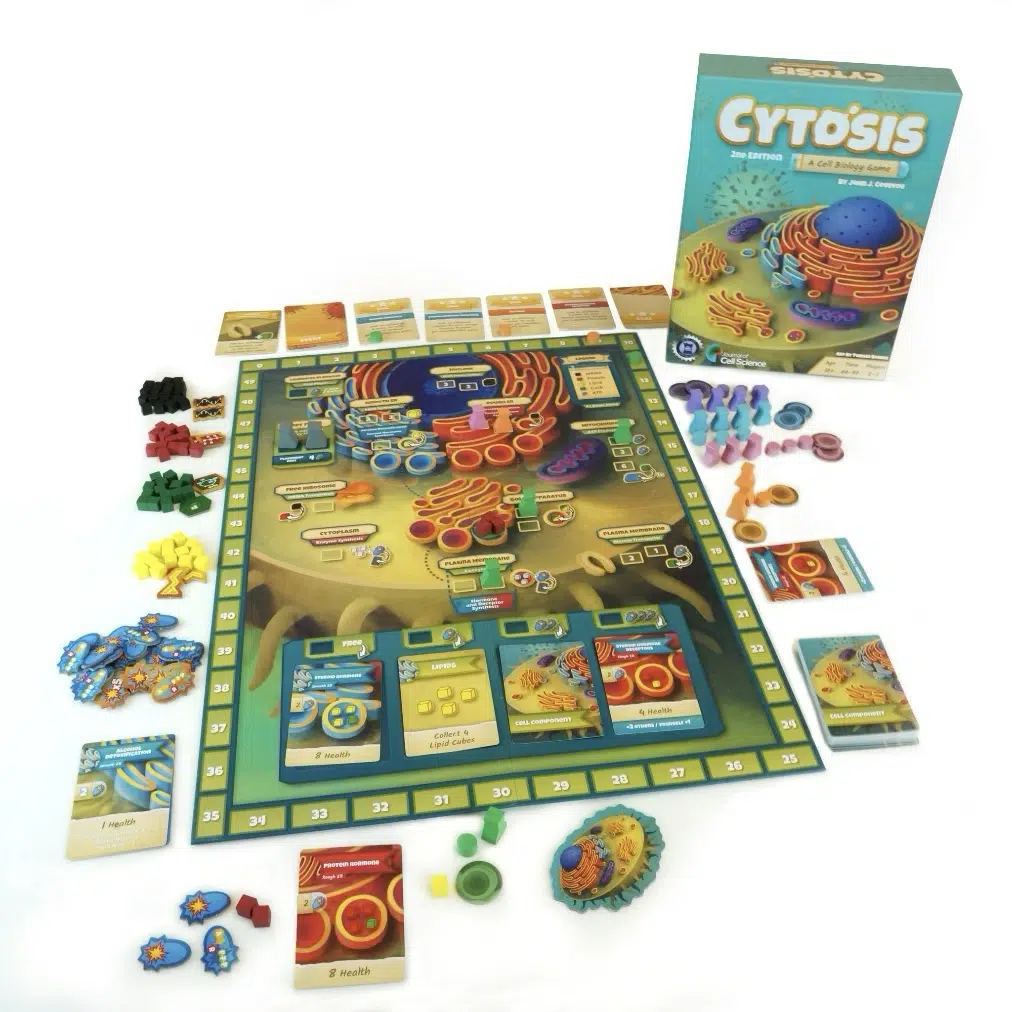
Another release from Genius Games, Cytosis: A Cell Biology Board Game is a worker placement board game set inside a human cell. Players take turns to send their worker tokens (represented by conical flasks) to different parts of the cell to gather resources in the form of ATP, proteins, mRNA and other macromolecules, or perform actions like collecting Cell Component Cards or trade resources.
The goal is to gather the most Health Points by the end of the game, which can be done by collecting resources, completing goals, and most significantly, making hormones, receptors and enzymes as shown on your Cell Component Cards.
With an actual game board and more moving parts than the previous two games, the gameplay in Cytosis may feel like a step up in complexity for beginners, but the actions that players can take and the order in which they occur link seamlessly with the biological processes that take part in a cell.
For example, black mRNA tokens are collected from the nucleus (DNA transcription), and can be converted into red protein tokens at the free ribosome (mRNA translation). The protein tokens, along with a transport vesicle disk and green carbohydrate tokens, may be used to score points by completing a protein hormone card in the Golgi apparatus – at the cost of 2 ATP, which acts as a form of currency and must be gathered from the mitochondria.
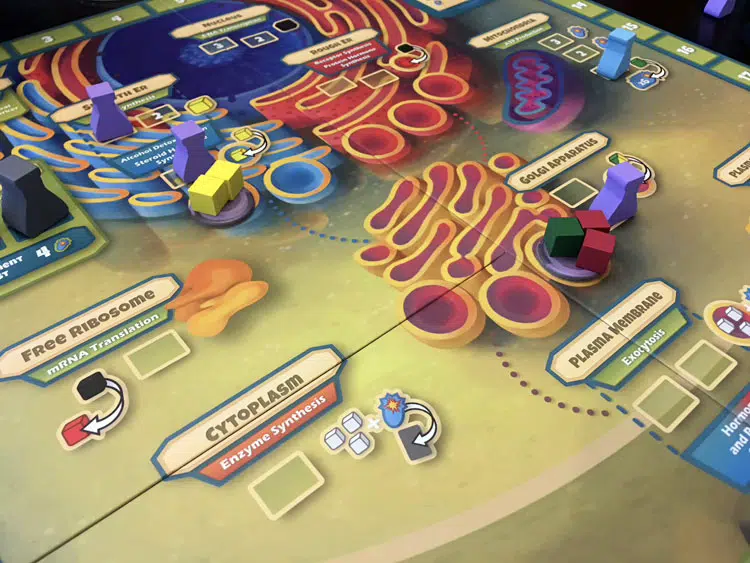
Seasoned board game players familiar with worker placement and engine building games can learn a great deal about the reactions and conversions that occur in different parts of the cell by studying how these processes translate into board game mechanics. On the other hand, biology students who are new to board games will find that their understanding and knowledge of cell biology can help them pick up the game mechanics and flow more smoothly.
Like most of Genius Games’ library, Cytosis is a well-designed game that stands on the merits of its gameplay and player experience, with the accurate (albeit slightly simplified) representation of biological processes being a big bonus in terms of educational value. While it definitely takes longer to play and set up compared to a card-based game, it rewards players with a highly interactive learning experience that gives them the chance to engage in-depth with the interlocking systems of a cell.
Video Games:
Sokobond Express (2024)
This is a puzzle game where the goal is to draw an unobstructed path for an atom to move about a grid and form bonds with surrounding atoms in the correct orientation to make a molecule. A hybrid of older titles Sokobond (2013) and Cosmic Express (2017), Sokobond Express has a minimalist aesthetic and intuitive design, making it incredibly easy to start with early levels that can be cleared in a matter of seconds.
However, the level of difficulty gradually ramps up – as more levels are unlocked, players need to manage positive and negative charges, additional electrons, and limited grid space on their path to create larger and more complex molecules.

Some chemistry concepts in the game are accurate – the atoms all have correct valency and most molecules are accurate in terms of formula (if not geometry, but that’s a limitation of the grid system). However, other aspects, such as bonding structure and stability, have been altered in order to enhance puzzle design.
For example, species such as O+, which is unstable in nature, are included in some puzzles that involve picking up electrons to neutralize the positive charge before creating a molecule. Interesting facts about different elements are also shown at the end of each level, and although they are correct, they often have nothing to do with the molecules you just created during that level.
Although the molecules and chemistry in Sokobond Express shouldn’t be taken as an accurate study guide, it is still a simple yet beautiful puzzle game that provides a quick, bite-size challenge for your mind. Chemistry students will also get a kick out of trying to name the molecules, and guessing whether the more obscure species actually exist in real life as well. (the results may actually surprise you!) It is available not only through Steam, but also on Nintendo Switch, iOS and Android devices, making it perfect for a short gaming experience on the go.
Website: https://sokobond.express/
SpaceChem (2011)
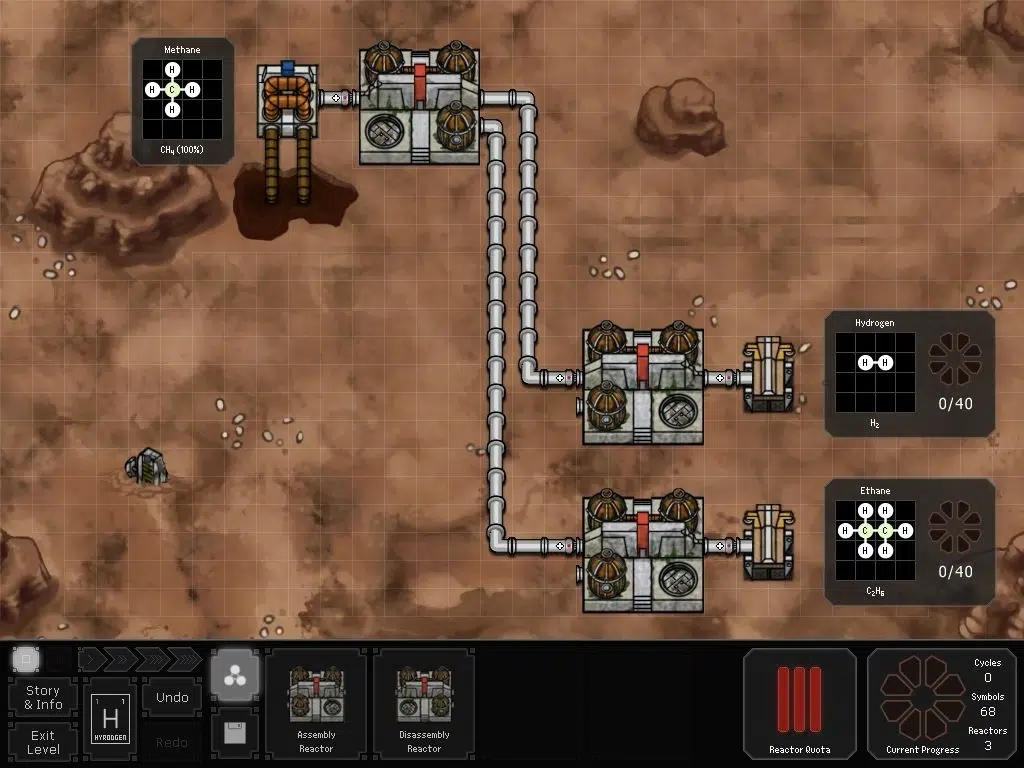
For gamers looking for a bigger challenge, this indie puzzle game developed by Zachtronics places you in the role of a Reactor Engineer for the titular SpaceChem company, harvesting raw materials from distant planets to convert into valuable molecules. To do this, you will need to design reactor systems that disassemble molecules into constituent atoms, reassemble the atoms into your target molecules, and transport the materials to where they are needed.
This is a game known to be highly technical and challenging, since players not only need to manage the transport and separation of different products, they also need to build a functioning system within each reactor using various conveyor belts and functions that carry, react and deposit materials that enter and exit.
Players have reported taking years to clear the game due to the increasing complexity and difficulty each level presents, and very few are able to complete everything without referring to some guides and tutorials, but the amount of satisfaction they get from solving each puzzle is immense, and many even find themselves going back to see if they can develop a more elegant or streamlined solution.
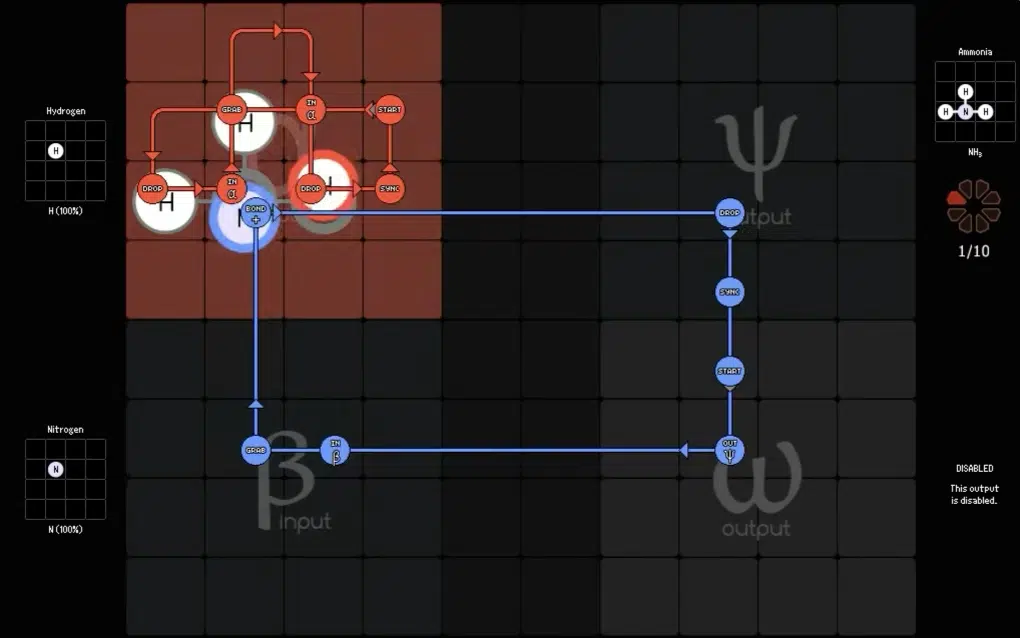
There is an in-game Periodic Table that displays atomic and mass numbers of each element, which comes in handy when dealing with puzzles involving atomic fission and fusion. However, many liberties have been taken in the nature of bonding and chemical reactions in this game for gameplay purposes.
Since the game is designed around simple molecules, even ionic compounds like iron oxide and giant molecular substances like carbon are presented as molecules, and the developers often treat true-to-life chemical formulae as a suggestion rather than a matter of fact. And we can’t forget the whole premise of disassembling individual molecules and mechanically rearranging the atoms into new molecules, rather than producing the target molecules via actual chemical reactions.
It would be more accurate to say that SpaceChem is really game about programming and engineering with a chemistry and science fiction theme, and that is what makes it interesting to a chemistry or general science student: each level presents you with an objective to meet, and you need to design, test and optimise your own solution. There are many potential solutions, and you’re only limited by the resources provided and your own creativity. It allows you to practice problem solving and analysis in a context that is different from traditional study methods, which are important skills to have in any field of science or engineering.
Zachtronics has a penchant for developing programming-style games with a science, industrial or chemistry theme: if SpaceChem seems like your thing, check out Opus Magnum (2017) and Molek-Synthez (2019)
Website: https://www.zachtronics.com/spacechem/
Steam Page: https://store.steampowered.com/app/92800/SpaceChem/
Big Pharma (2015)

Developer Twice Circled takes the long process of drug discovery, development and production and turns it into an addictive game that’s part business simulator and part factory building puzzle. In Big Pharma, you start your own pharmaceutical company, and make use of your limited funds and factory space to discover ingredients, bring out their pharmacological effects by processing them at optimal concentrations, and turning them into marketable drugs to turn a profit.
You can send out explorers to search for rare ingredients, upgrade ingredients to produce more potent and higher valued cures and even combine different ingredients to create drugs with multiple effects – but be careful to manage those negative side-effects too!
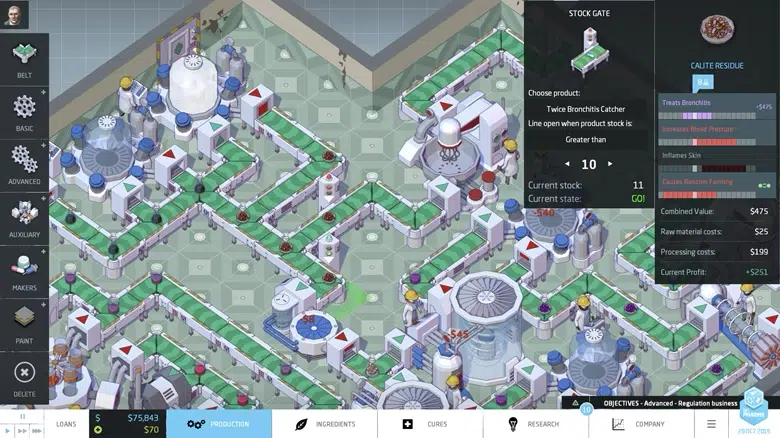
You start with a small floor area and limited delivery slots for your ingredients and products, in which you need to fit your production line, including machinery and conveyor belts. Specific machines have specific uses and can only be placed in fixed orientations, and even have different processing rates that need to be considered. You can buy additional factory space with more slots, but prices get increasingly higher after each purchase, creating an incentive to be as space efficient as possible.
As you progress along the research tree, you can eventually unlock more sophisticated equipment – with higher processing costs that need to be factored into your margins. And with competitors vying for the same market share, even the slimmest advantage can be crucial to keep your factory afloat.
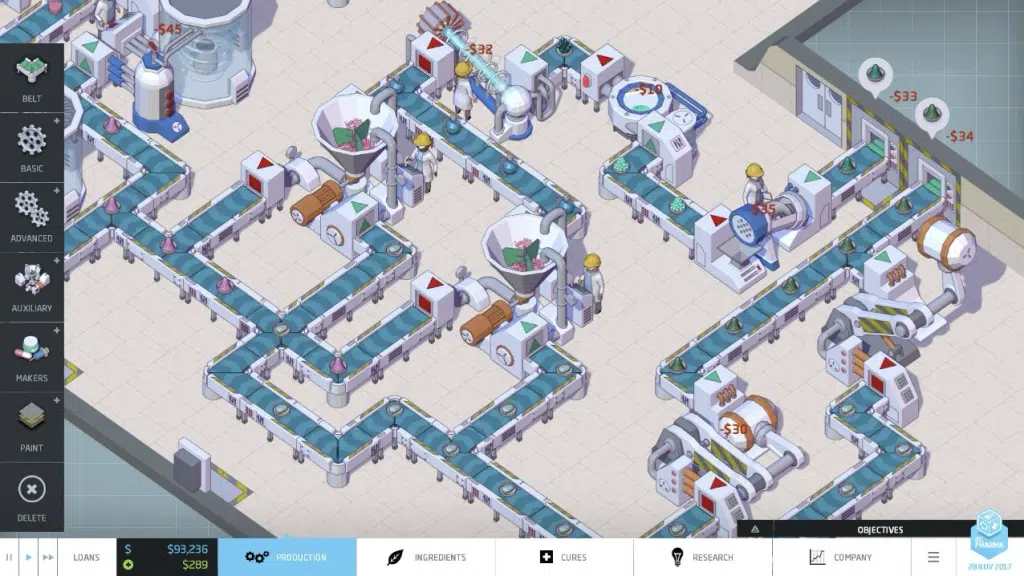
Of course, much of the science in Big Pharma is simplified or even cosmetic to allow the gameplay to shine (for example, none of the ingredients featured are real), but there are some truths to it – many molecules with medicinal effects are most effective at particular concentrations (too low and they are ineffective, too high and they become toxic), and may be denatured or destroyed without careful consideration of the processing method.
Commercial drugs can also produce unwanted side effects, which sometimes can be mitigated through new processes or by changing the delivery method, but other times cannot be fully removed and hence become a key risk to consider when taking the drug. Many machines in the game are also named after real equipment in laboratories and production facilities, but do completely different things – for example, in a real laboratory, autoclaves are used to sterilize equipment, not halve the concentration of a sample.
While the science and equipment may not be completely accurate, Big Pharma is still a fun experience that makes you think about the real challenges of turning raw ingredients into a product, and even teaches you some economic lessons in supply, demand and pricing. It also has an expansion called Marketing & Malpractice, which adds on some quality-of-life improvements as well as new options to help boost your drug sales and your profit margins – subject to varying levels of ethics, of course. If you enjoy the base game and feel ready for your villain arc, the expansion unlocks the definitive Big Pharma experience.
Website: https://www.bigpharmagame.com/
Steam Page: https://store.steampowered.com/app/458640/Big_Pharma_Marketing_and_Malpractice/
With more publishers and developers in both the board game and video game industry, gamers today have a great deal of choice when it comes to educational and science-themed games. Many educators are aware of how to use games to enhance learning for students of all ages, and some have even entered game development themselves. If you’re feeling a little stuck in your study routine, perhaps exploring a game or two might shake things up and help you discover something new about the subjects you have been dealing with all this time.
Find out more by joining us at Science of Studying!
Prepared by: Nadine
A little more about ourselves…
The Science of Studying provides live online tuition via Zoom classes for Combined Chemistry, Combined Biology, Pure Chemistry, Pure Biology, JC Chemistry and JC Biology. To date, we have taught more than 800 students over 12 years. For more information on tuition classes, please click on one of the following links:
In case you are wondering, yes – there is a science behind studying! At Science of Studying, we use our SOS system™️ to teach our classes so that even last-minute students can see remarkable improvements in their grades – without mind-numbing memorisation of textbooks and without the drudgery of doing numerous assessment books.
The SOS system™️ guides students through an effective process of:
- Understanding key concepts
- Applying the concepts through smart, targeted practice.
- Learning to avoid common ‘traps’ set by examiners
- Learning exam-smart answering techniques for each topic
- Overcoming tricky exam questions
All these conducted in a fun, interactive, stress-free online environment.
If you need help with your Chemistry and Biology subjects, do reach out to us and we will see what we can do to help.
Website: https://thescienceofstudying.com/
Admin number: +65 88082348